
Tourtière is a classic French-Canadian dish that dates back to the 17th century in Québec. It’s a hearty, comforting meal for frigid Canadian winters and is perfect for sharing with a large gathering of family or friends—traditionally at Christmas, but equally enjoyable anytime during the colder months, wherever you are.
Ralph and I didn’t grow up with tourtière. He discovered this recipe years ago in LCBO Food & Drink by Lucy Waverman — unfortunately, I don’t have the date, but I know we were making it before we moved to Germany in 2008. I’ve often requested it for my birthday meal because it’s so delicious.
Just this past weekend, Ralph made a pulled-lamb version with Moroccan spices (recipe coming soon!).
The pastry is the star of this dish, with its herby flavour from thyme and a blend of warming spices. You’ll love the scent that fills your kitchen as it bubbles away in the oven.
This recipe is adapted from the original version. The main change was replacing the shortening and vegetable oil with coconut oil, since we don’t use seed oils. Metric conversions for cups have also been added for those who prefer to use a scale for measuring.
Ingredients for Pie Crust:
- 3 cups (360g) all-purpose flour (550 Weizenmehl in Germany)
- ½ tsp salt
- 2 tsp dried thyme
- 1 tsp dry mustard
- ½ cup (112g) coconut oil
- 1 cup (227g) butter
- ¼ cup (60g) ice water
- 2 Tbsp white vinegar
Ingredients for the Filling (serves 8-10):
- 2 Tbsp (28g) coconut oil or tallow
- 220g chopped onion (1 large)
- 2lb (1kg) ground pork
- 3 cloves garlic, chopped
- ½ tsp allspice (Piment)
- ¼ tsp cayenne
- 1 tsp dried thyme
- 1 bay leaf
- 2 tsp dried savoury (Bohnenkraut)
- ½ tsp ground nutmeg (Muskat)
- Salt and freshly ground pepper to taste
- 1 cup (240g) beef broth
- 2 Tbsp rolled oats
- ¼ cup (15g) chopped fresh parsley
- 1 egg, beaten
Instructions for the pie crust:
- Make pastry in a food processor or by hand. Sift flour with salt, thyme, and mustard. With your fingertips, cut in coconut oil and butter until the mixture resembles coarse meal.
- Combine the water and vinegar, then stir into the mixture. Gently form into a ball. If it crumbles and won’t hold together, break it up and add a few tablespoons of cold water, and knead together again. Wrap in waxed paper and chill for 30 minutes.
Instructions for the Filling:
- Preheat the oven to 220°C (450°F).
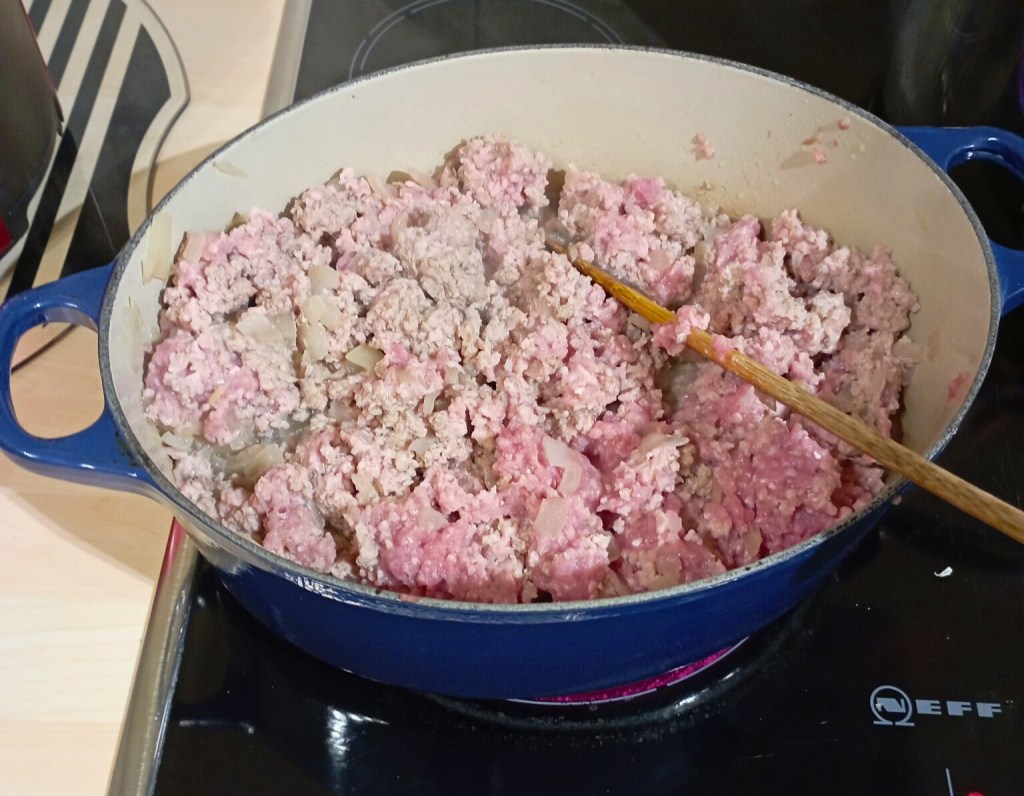
- Heat the oil over medium heat in a skillet or heavy saucepan. Add the onion and cook until soft and translucent. Add the meat and cook until the pink colour disappears. Drain off the excess liquid and fat, leaving a tablespoon in the pan. I usually drain it in a colander, then return it to the pan—this is quicker than spooning out the fat.
- Add the garlic, allspice, cayenne, thyme, bay leaf, savoury, nutmeg, salt, and pepper. Stir to combine, then sauté briefly until fragrant.
- Add the beef broth and oats. Simmer, covered, until the pork is fully cooked and the mixture is thickened, stirring occasionally as most of the liquid is absorbed. Stir in the parsley and remove the bay leaf. Taste and adjust seasoning with salt, pepper, or spices as needed. Allow the filling to cool.
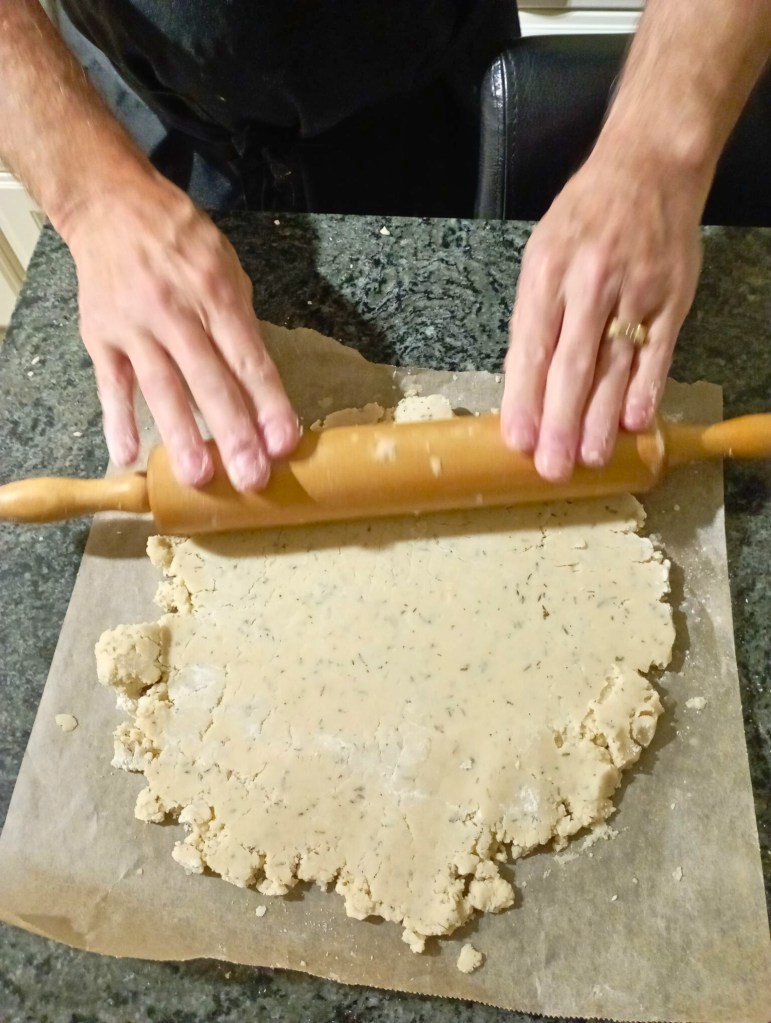
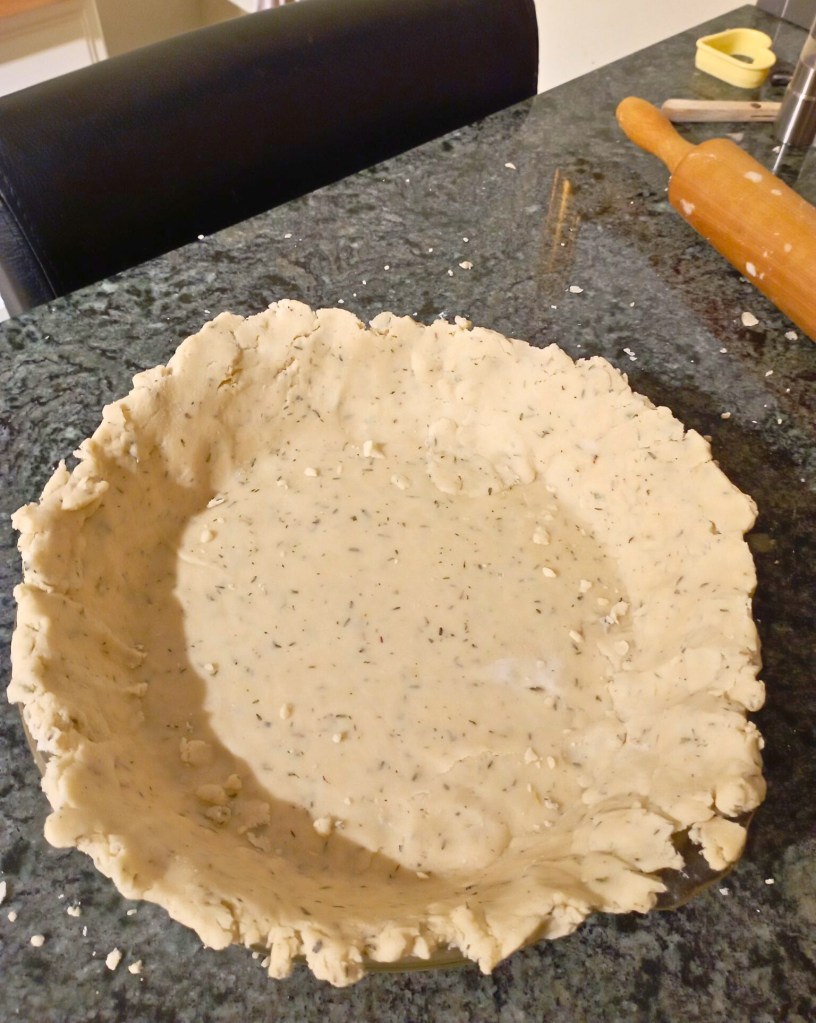
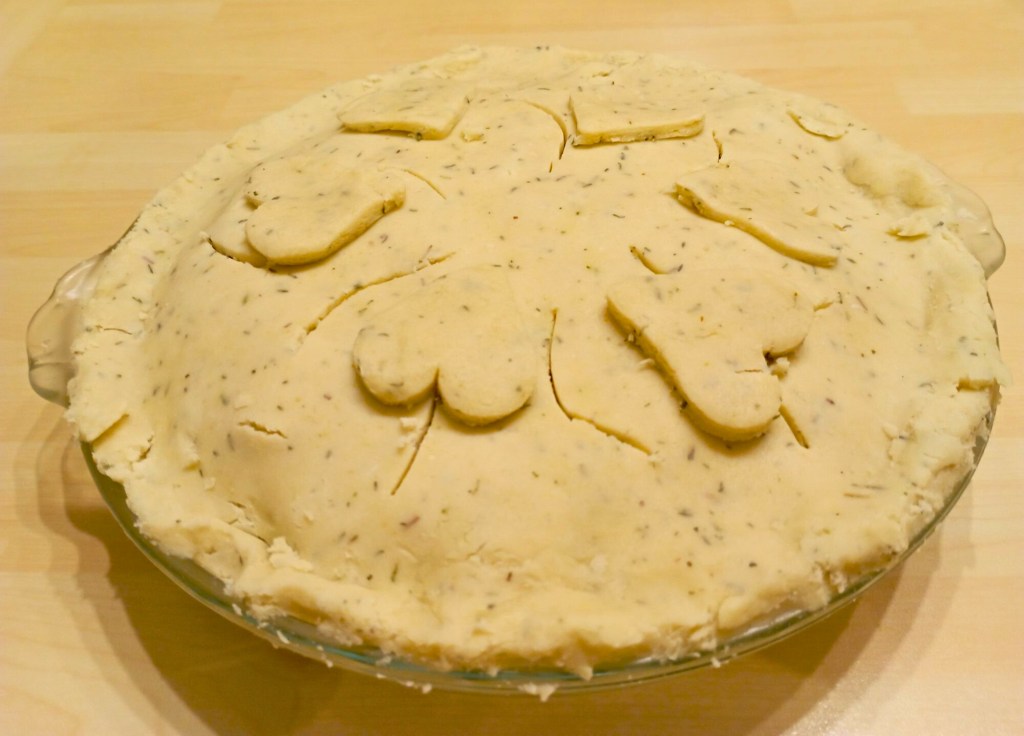
- Divide the pastry into two portions, 2/3 and 1/3. Roll out the larger portion to fit a 9-inch (23 cm) deep pie plate or loose-bottom flan pan. Line the pan with the pastry, ensuring the dough covers the rim, then add the filling. Cover with the remaining pastry, sealing the edges and trimming any excess, reserving the trimmings for the optional step. Make small incisions on top of the pastry to allow steam to escape.
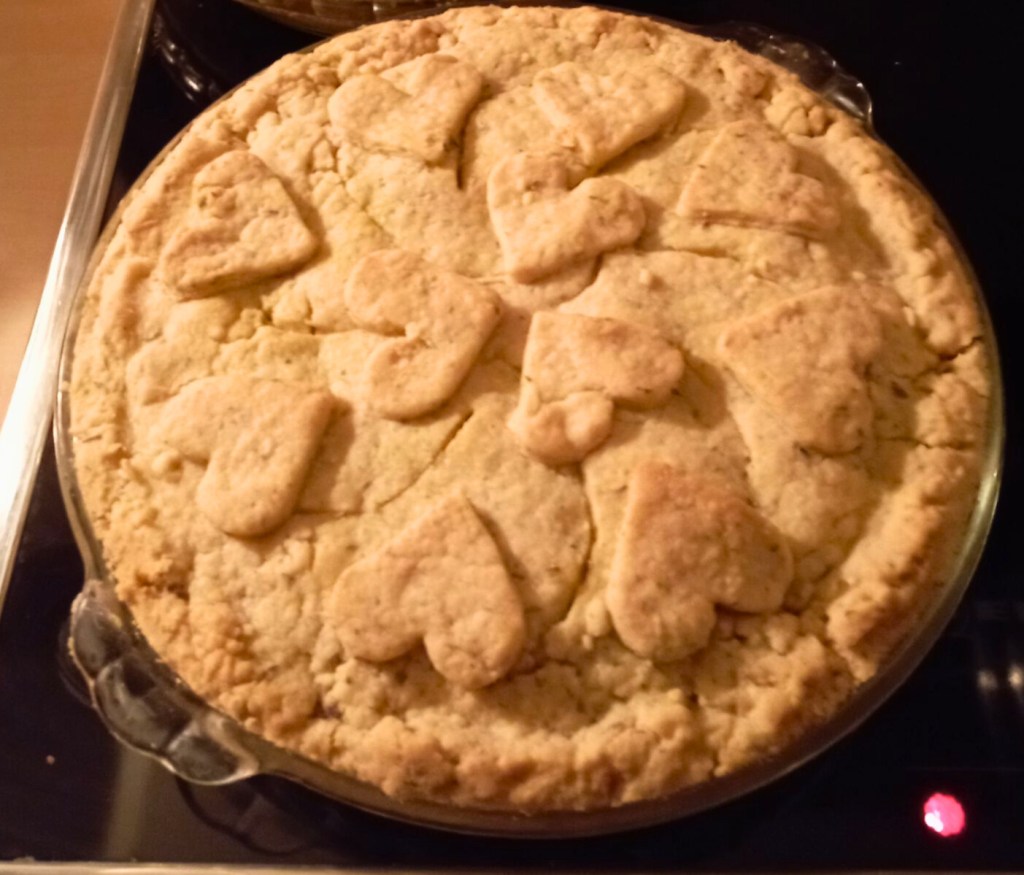
- Optional: Roll out the reserved pastry trimmings and cut into shapes with your favourite cutter (we use a heart ❤️) to decorate the top of the pie.
- Brush the top with the beaten egg.
- Bake at the initial temperature for a short time, about 10 minutes, then reduce the oven heat to 190°C (375°F) and continue baking until the pastry is golden.
Pairings:
As this dish is quite rich, we suggest pairing it with a simple green-leaf salad with a vinaigrette dressing, pickles, pickled beets, or sauerkraut.
Traditionally, in Quebec, a green tomato ketchup is made to accompany it, but we haven’t tried this yet.

 We are cookin' with gas!