
Fresh pasta is well worth the effort, and the process is not that difficult—especially if you have a KitchenAid pasta attachment or similar equipment. Making it all by hand is equally soulful, if not more so.
This dish uses a David Rocco recipe, a Canadian chef with Italian roots who has fed and entertained us well over the years thanks to a good friend who gifted us his cookbooks “David Rocco’s Dolce Vita” and “Made in Italy”. David’s recipes are truly Italian, using very few ingredients and guaranteed delish. Both of our books are filled with post it notes of recipes we’ve made over and over again.
The lemon sauce below is from his Spaghetti al Limmone (Spaghetti in a Lemon Sauce), minus the spaghetti as we substituted for the fresh fettuccine egg pasta. But we’ve made it numerous times with dried spaghetti, too. The citrus brings a refreshing zing, evoking the feeling of warmer weather when made on a chilly evening.
Ralph can’t recall what inspired him to add flamed shrimp to this dish. Perhaps it was to introduce a protein, and the pairing simply felt like a natural fit (which it certainly is!) but it’s equally enjoyable without the shrimp.
The fresh pasta recipe is from our equally loved and worn cookbook, The Italian Cooking Encyclopedia. If you enjoy making fresh pasta and love seafood, you may want to try our Seafood Lasagna with Ricotta.
Ingredients:
Lemon sauce:
- 1 clove garlic
- 2 bio (organic) lemons; zest of one lemon
- 5 Tbsp (75ml) extra virgin olive oil
- 1 cup (250ml) freshly grated Parmigiano-Reggiano or Padano cheese, plus extra for finishing dish
- Salt and pepper, QB
- 1 bunch fresh flat-leaf parsley, chopped
Fresh fettuccine egg pasta (serves 3-4):
- 2 eggs
- 1 cup of semolina flour (normal flour works too but doesn’t have the same level of gluten that gives a nice rubbery texture to the pasta).
- Pinch of salt
Flamed Shrimp:
- 10 peeled and deveined shrimps
- Salt, pepper, and garlic powder QB
- Olive oil for frying QB
- Splash of brandy (Ralph used a German brand: Chantre Weinbrand)
Instructions:
Lemon sauce:
- Cut the garlic in half and rub all around the inside of your mixing bowl.
- Use a micro-planer to remove the zest of 1 lemon
- Cut lemons in half and squeeze out juice into the bowl using a citrus reamer or by hand (be sure to remove seeds from bowl).
- Drizzle olive oil into the lemon juice, whisking as you go until the mixture emulsifies.
- Add a good handful of Parmigiano, salt, and pepper. Add the parsley and lemon zest and whisk gently until combined.
- Set bowl aside.
Fresh egg pasta (using KichenAid or hand mixer):
- Place all ingredients in bowl for KitchenAid. Mix together using the paddle attachment. Add more flour if necessary to get a flexible but not sticky consistency.
- Use your hands to form dough into a ball and knead manually if not smooth.
- If you don’t have a food processor, mound the flour on a clean, flat surface, sprinkle in the salt, and create a wide well with a fork. Crack the eggs into the flour and use the fork to whisk the eggs, gradually incorporating the flour.
- Once the flour is all incorporated, use a scraper to pull the dough into the middle from the sides, chopping it all together.
- When it’s incorporated enough to form a ball that is not too sticky (add flour as necessary) begin kneading the dough by hand until it forms an nice rubbery ball.
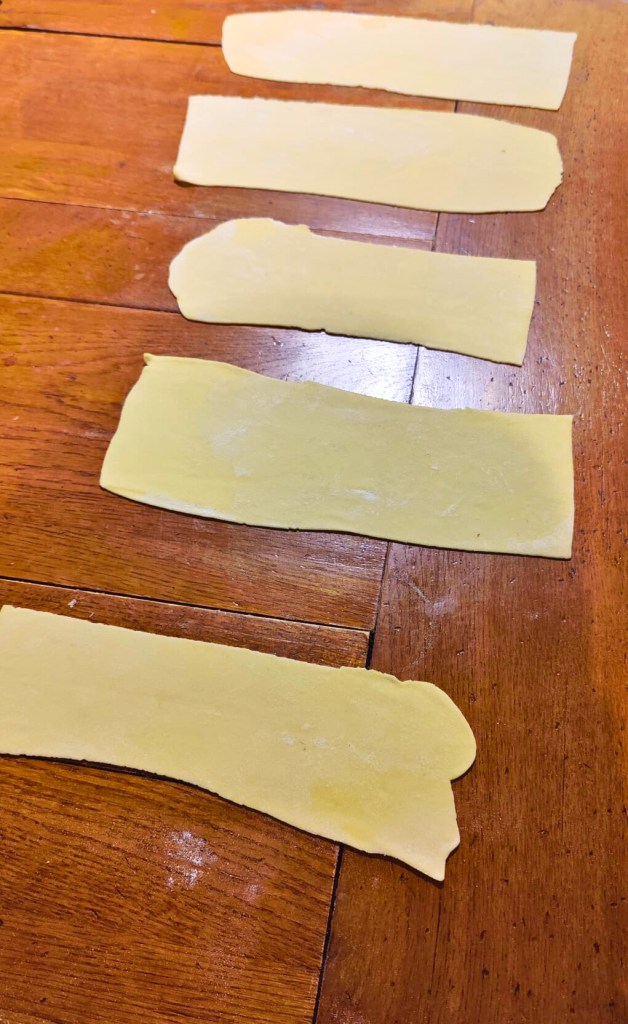
- Divide the ball into five sections. Using the KitchenAid pasta roller, pass the dough through the top to form a sheet, starting with setting 1. Fold it back on itself and run it through again.
- Set to level 2 and run it through twice.
- Repeat up until level 5 for a fettuccine.
- Lay the finished sheet on a slightly floured surface and repeat for the rest of the balls.
- If the sheets are too sticky, you will have difficulty cutting them so leave them to dry for a while if necessary.
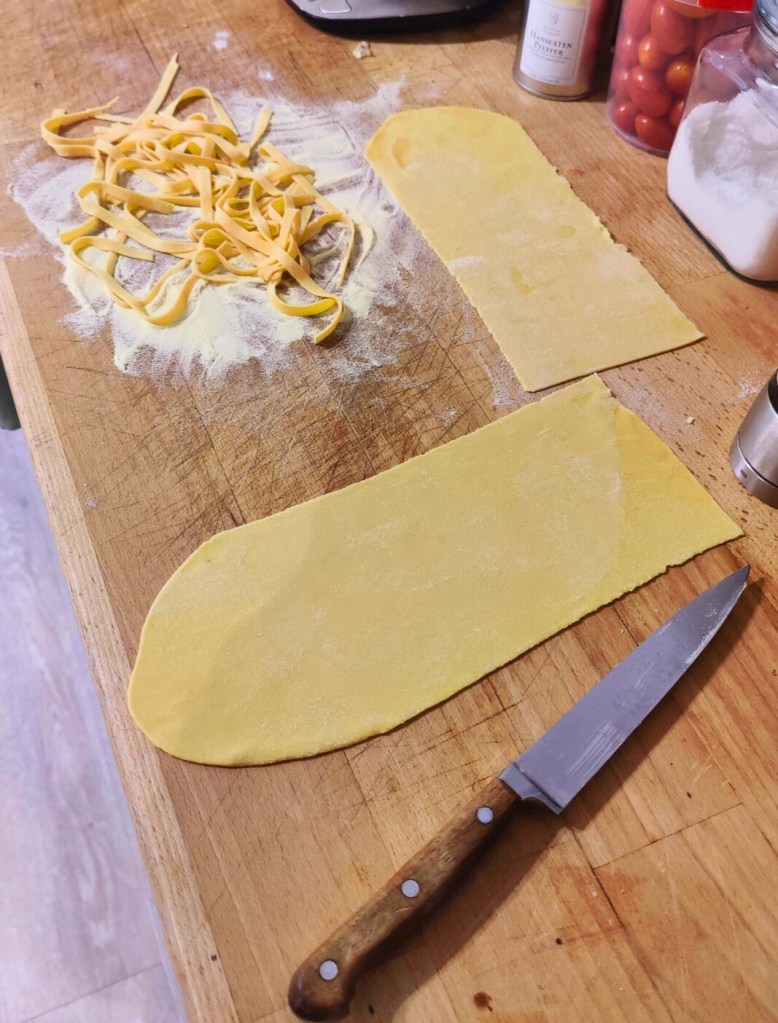
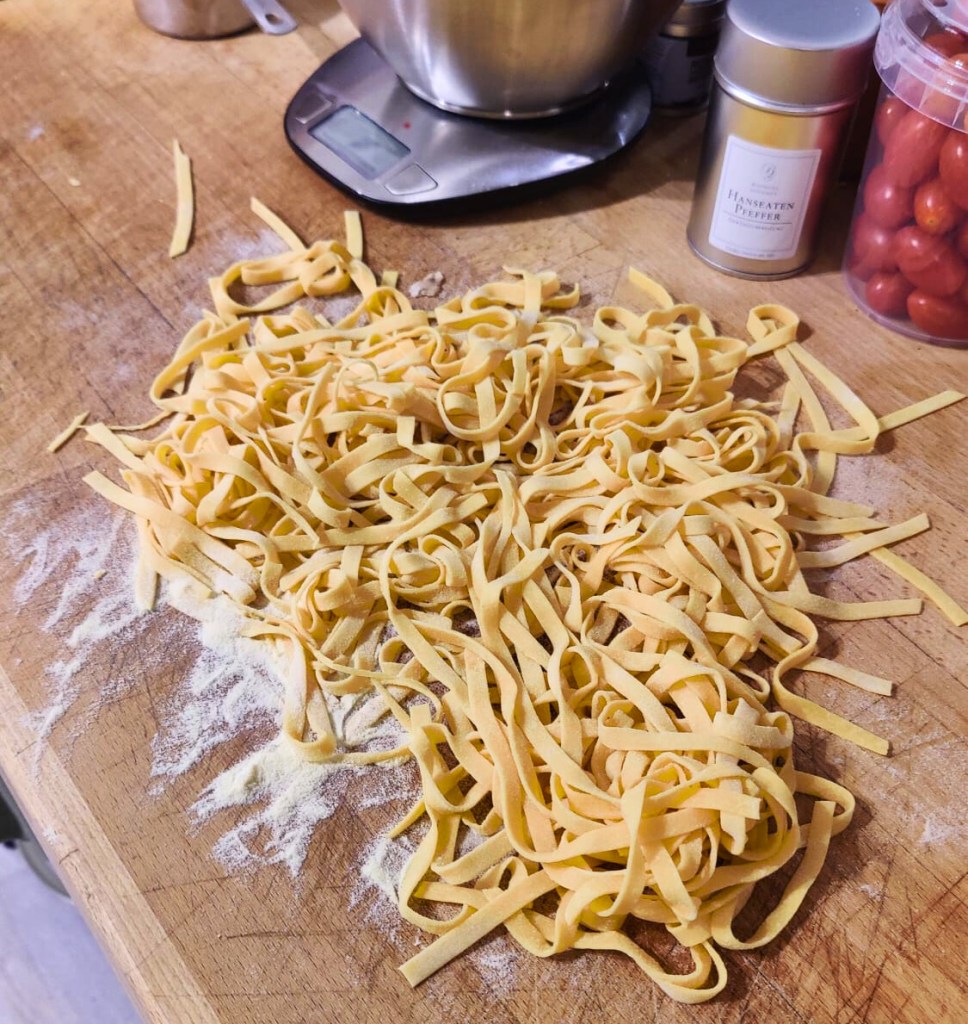
- Using the fettuccine attachment, feed each sheet through the cutter, and toss cut fettuccine with flour to prevent sticking. [See video]
- If you don’t have a pasta maker, roll out the dough with a rolling pin, dusting with flour as necessary to keep it from being sticky.
- Loosely roll each sheet and cut across the roll in fettuccine-width strips and toss cut fettuccine with flour to prevent sticking.
- Boil pasta until cooked but firm (about 15 minutes), drain, drizzle with olive oil to prevent sticking together and set aside until shrimp is finished.
Flamed Shrimp:
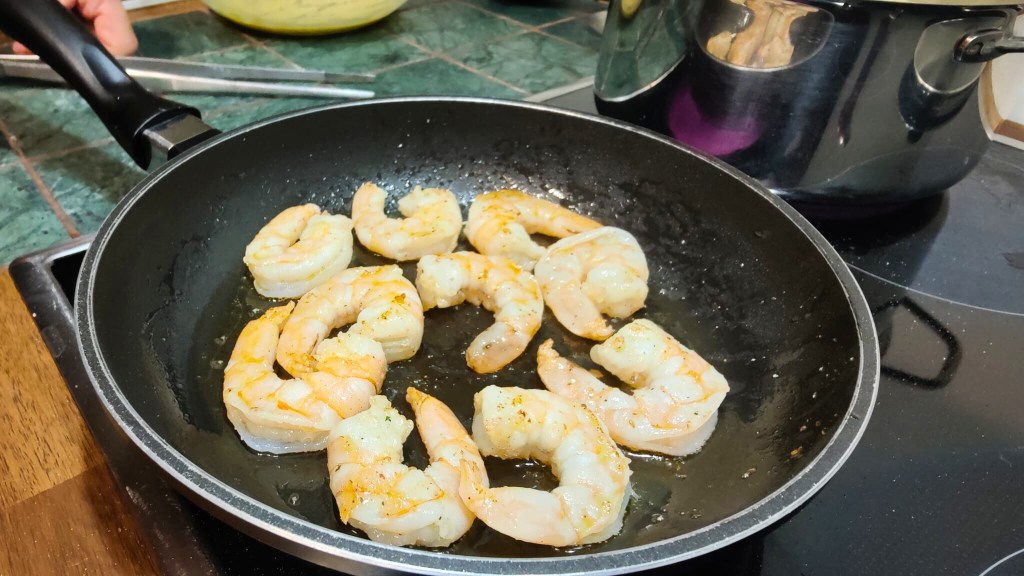
- Season shrimp and heat a skillet to medium-high.
- Cook the shrimp for about 1-2 minutes per side until opaque and lightly golden.
- Once the shrimp are nearly cooked, add a splash of the brandy and ignite with a lighter. The flame will burn the alcohol off quickly which takes about 30 seconds to 1 minute. Shake pan half way through. [See video]
- Keep the lid for the pan handy to smother the flames if things get out of control (like your smoke detector going off).
- Stir the lemon/oil mixture again and add fettuccine to bowl and toss to cover. Scoop pasta into serving bowls and top with flamed shrimp.
Tips:
- Zest lemon before cutting in half.
- Fresh pasta will make about 3-4 servings, so you should have some left over. You can leave it out to dry (about 24 hours) or it freezes well.
🍷 Wine pairing: Weingut Hirth Pinot Meunier & Pinot Noir




 We are cookin' with gas!